Marine ERP Software: Ship Chandlers, Shipyards & Marine Services (2026)
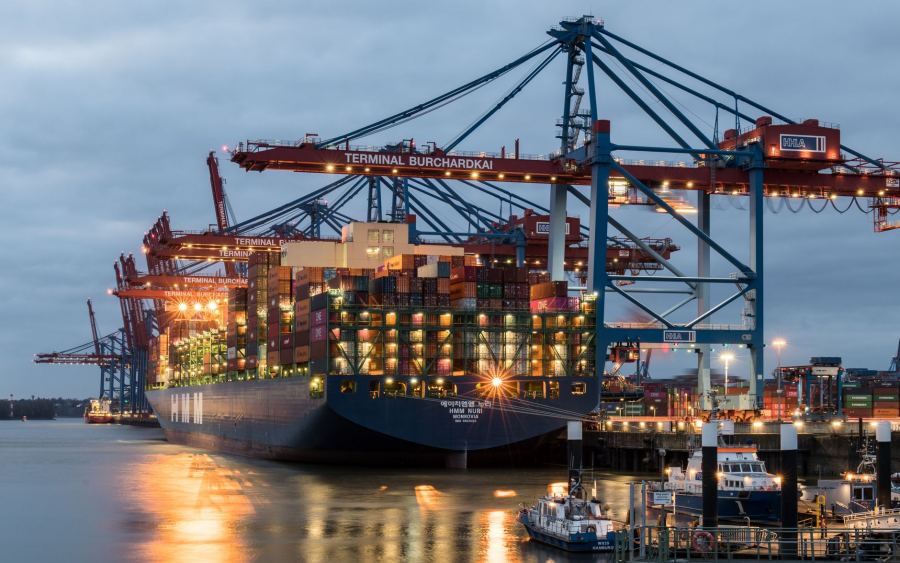
Short answer: Marine businesses — ship chandlers, marine service and engineering companies, shipyards, shipping agencies and seafood exporters — are poorly served by generic ERP because their work is organised around a vessel and a port call, not a customer and an order. The systems that work let you quote, supply, and invoice against a specific vessel on a specific call, handle bonded and duty-free stock, and cost each job or docking separately. ERPNext is usually the strongest fit in the Gulf and India: it is open-source, so vessel-call and job-costing structures can be modelled properly rather than forced into a sales-order template, and it has no per-user licence fees.
Compliance in one line: UAE 5% VAT with e-invoicing compulsory for larger businesses from 1 January 2027; Qatar has no VAT and only a draft e-invoicing law; Kuwait has no VAT (a 15% DMTT applies to large multinationals); India requires IRN and QR on invoices once turnover has passed ₹5 crore.
Search for “marine ERP software” and you will find very little written for this sector — not because the sector is small, but because marine operators rarely search that phrase. They search for the problem in front of them: how to bill a disbursement account, how to track spares against a vessel, how to keep bonded stock straight. This guide is written for those problems.
Why generic ERP struggles with marine work
Most ERP systems assume a stable customer who places orders that ship to an address. Marine work breaks all three assumptions. The paying customer is often an owner or manager in another country, the delivery point is a vessel that will be alongside for a matter of hours, and the same vessel may be served under different principals on different calls.
The practical consequence is that the vessel call — not the sales order — is the unit that everything should hang from: the enquiry, the quotation, the supply, the costs, and the invoice. Systems that cannot represent that end up tracked in spreadsheets alongside the ERP, which is where margin quietly disappears.
What each type of marine business actually needs
Ship chandlers and marine supply
- Quote against a vessel and a call, with the agent or owner as the payer — then convert quotation to supply to invoice without re-keying.
- Bonded and duty-free stock kept separate from duty-paid stock, because the tax treatment differs and mixing them is an audit problem.
- Delivery windows measured in hours. Stock availability has to be truthful at the moment of quoting, not at end of day.
- Multi-currency with clean realised and unrealised FX — quoting in USD while buying in AED or INR is the norm.
- Provisions, stores, spares and safety items with very different margins — so margin must be visible per line, not per invoice.
Marine services, engineering and repair
- Job cards per vessel capturing technician hours, spares consumed and subcontracted work.
- Costs committed before the supplier invoice arrives — otherwise a job looks profitable until the paperwork catches up.
- Warranty and rework tracked against the original job rather than written off as a new cost.
- Certification and calibration records attached to the equipment, since clients audit them.
Shipyards and dry dock
- Each docking is a project, with its own budget, progress billing and retention.
- Variation orders agreed mid-docking must reach the invoice — unbilled variations are the single most common leak in this business.
- Yard capacity and berth scheduling visible alongside the commercial position.
Shipping agencies
- Disbursement accounts. Proforma DA, funds received from the principal, actual port charges paid on their behalf, then a final DA that reconciles. This is agency-specific accounting and generic ERP has no concept of it.
- Clear separation of your revenue from money held and spent on a principal’s behalf — blurring the two overstates turnover and confuses tax.
Seafood and marine product exporters
- Lot and batch traceability with grade-based pricing — two consignments of the same species are not the same item.
- Cold-chain records, export documentation and duty drawback handled inside the same ledger. Relevant across Kerala’s seafood export base.
Marine contracting, dredging and land reclamation
This is the segment generic ERP handles worst, and it is a large part of Gulf marine activity: dredging and reclamation, shore protection, quay walls and jetties, culvert crossings, offshore transportation and marine plant hire. It looks like construction from a distance, but it is not — and construction ERP configured naively will misprice it.
The difference is what you are actually selling. A building contractor sells completed structures. A marine contractor sells volume moved and structure placed, measured in cubic metres dredged, tonnes of rock armour placed and metres of quay wall built — while simultaneously running a capital-intensive fleet of dredgers, barges, tugs and excavators whose utilisation determines whether the contract makes money.
What the system has to get right
- Measured progress, not percentage guesses. Interim payment applications are built on surveyed quantities — cubic metres dredged against the bill of quantities. The system must value work done from measured quantities, not from someone’s estimate of "about 60% complete".
- Plant and fleet as a cost centre and a revenue line. Each dredger, barge, tug and item of heavy plant needs its own cost record: fuel burn, crew, maintenance, spares, standby days and idle time. The same asset register has to support equipment hire out to third parties, which is a separate revenue stream with its own invoicing and utilisation reporting.
- Mobilisation and demobilisation as costed events. Moving a dredger between countries is a major cost and often a separately billable milestone. Systems that treat it as general overhead lose the ability to price the next job accurately.
- Variation orders that reach the invoice. Marine works change constantly — ground conditions differ from survey, scope moves. Unbilled variations are the single largest silent margin leak in this sector.
- Retention and performance guarantees tracked per contract and released on schedule, often years after the work.
- Material supply integrated with works. Rock, aggregate and fill are frequently supplied as well as placed, so purchasing, haulage, landed cost and placement all need to reconcile to one contract.
- HSE and quality documentation attached to the job. Marine contractors typically hold ISO 9001, 14001 and 45001, and clients audit against them. Certificates, inspections, calibration and competency records should hang off the equipment and personnel records, not sit in a separate folder.
Operating across several Gulf countries at once
Marine contractors in this region rarely work in one country. A fleet moves between Bahrain, Qatar, Saudi Arabia, Kuwait, the UAE and Oman as contracts are won — and each of those countries taxes the work differently. That is an accounting problem before it is a logistics problem.
- Bahrain: 10% VAT — the highest in the GCC after Saudi Arabia — with mandatory registration at BHD 37,500 of annual taxable supplies (voluntary from BHD 18,750). The National Bureau for Revenue is preparing an e-invoicing framework and has begun consulting larger businesses, though it is not yet mandatory.
- Qatar: no VAT at all, and e-invoicing exists only as a draft law approved in May 2026. Different rules, same fleet.
- Saudi Arabia: 15% VAT with ZATCA Phase 2 — cryptographically signed XML invoices cleared through Fatoora, and the threshold keeps falling.
- UAE: 5% VAT and 9% corporate tax, with structured e-invoicing mandatory for larger businesses from 1 January 2027.
- Kuwait: no VAT; a 15% Domestic Minimum Top-up Tax applies only to very large multinational groups.
One ERP with proper multi-company, multi-currency and per-country tax configuration handles this. Several disconnected country systems do not — you lose the one number that matters most: true margin per contract and per vessel across the whole group.
Why ERPNext suits marine contractors
Marine civil work needs objects that no packaged ERP ships with: a dredging contract measured in volume, a plant asset that is both a cost centre and a hire item, a mobilisation event, a survey-backed payment application. Because ERPNext is open-source, these can be modelled properly rather than approximated with sales orders and journal entries — and adapted again as Bahrain’s e-invoicing framework and the wider GCC rules land. There are no per-user licence fees, which matters when site engineers, surveyors, plant controllers and QS staff all need access. See our construction ERP guide for the project-costing fundamentals this builds on, and the Qatar and Bahrain implementation services for country specifics.
Compliance by country
United Arab Emirates
5% VAT with FTA-compliant tax invoices, and 9% corporate tax on profits above AED 375,000. The bigger change is the Electronic Invoicing System: voluntary from 1 July 2026 and mandatory for businesses with revenue of AED 50 million or more from 1 January 2027, with smaller businesses following on 1 July 2027. For marine businesses this matters more than most, because free-zone and mainland entities are common and each transfer between them carries a VAT treatment that a structured e-invoice will expose.
Qatar
Qatar does not have VAT — no rate, no threshold, no announced date. In May 2026 the Council of Ministers approved a draft electronic invoicing law, which still requires further passage before it takes effect. Corporate income tax on foreign-owned profits is filed through Dhareeba, and salaries run through the Wage Protection System. The sensible posture is readiness, not urgency.
Kuwait
Kuwait has not introduced VAT either, and current policy favours other instruments over it. A Domestic Minimum Top-up Tax of 15% took effect on 1 January 2025, but it applies to large multinational groups (consolidated revenue of EUR 750 million or more) — most Kuwaiti marine businesses are outside its scope. No e-invoicing mandate has been announced. In practice this means Kuwait operators should optimise for operational control now, and choose a system that can absorb VAT later without being replaced.
India
GST e-invoicing is mandatory once aggregate annual turnover has exceeded ₹5 crore in any financial year since 2017–18, and the obligation is permanent once crossed. An invoice without a valid IRN and QR code is invalid, so your customer cannot claim Input Tax Credit against it — a back-office slip becomes a commercial problem. Goods movement needs e-way bills, which should be produced from the same document as the invoice rather than re-keyed.
Why ERPNext suits marine operators
Marine work needs structures that off-the-shelf systems do not ship with: a vessel-call record, a disbursement account, a docking project. Because ERPNext is open-source, those can be modelled as first-class objects rather than bent into a sales-order template — and adapted again as the UAE and Qatar e-invoicing rules land. There are no per-user licence fees, which matters in a sector that scales headcount with vessel traffic. The honest trade-off: ERPNext rewards a competent implementation and punishes a careless one.
We build our own software on ERPNext rather than only configuring it — our Sellbee route-sales application is one example, and a Gulf distributor running it grew from 7 vans to 15. That engineering capability is what makes vessel-call and DA structures practical rather than theoretical.
Running a marine business in the Gulf or India?
Tell us how you actually operate — vessel calls, jobs, dockings or DAs — and we will show you how it maps into ERPNext, with a fixed-scope quote and no per-user fees.
Book a free consultation →Related guides
- Best ERP software in the UAE · Best ERP software in Qatar
- Construction ERP software (project costing, retention — closest to shipyard work)
- Manufacturing ERP software · ERPNext implementation services by country
For the ship-supply side specifically — IMPA and ISSA codes, RFQ turnaround, bonded stores and per-line VAT on vessel supply — see our dedicated guide to ERP for ship chandlers in Dubai and the UAE.
Frequently asked questions
What is marine ERP software?
Marine ERP software is an enterprise system configured around how marine businesses actually operate: work is organised by vessel and port call rather than by customer and sales order. It typically adds vessel-call records, job cards per vessel, bonded and duty-free stock separation, disbursement accounting for shipping agencies, and project costing per docking, on top of standard accounting, inventory and payroll.
Which ERP is best for a ship chandler?
For most ship chandlers in the Gulf and India, ERPNext is the strongest fit. It can quote against a specific vessel and call with the agent or owner as payer, keep bonded stock separate from duty-paid stock, handle multi-currency quoting and buying, and show margin per line rather than per invoice. Being open-source, the vessel-call structure can be modelled properly, and there are no per-user licence fees.
How does ERP handle disbursement accounts for shipping agencies?
A disbursement account tracks money spent on a principal's behalf during a port call: a proforma DA is issued, funds are received, port charges and services are paid out, and a final DA reconciles the difference. Generic ERP has no concept of this, so it must be modelled explicitly - keeping agency revenue separate from principal funds, which otherwise overstates turnover and confuses tax reporting.
Do marine businesses in Qatar and Kuwait need to worry about VAT?
Neither country has VAT today. Qatar has not introduced it and has published no rate, threshold or date, though a draft e-invoicing law was approved in May 2026. Kuwait has also not introduced VAT; its 15% Domestic Minimum Top-up Tax, effective January 2025, applies only to large multinational groups with EUR 750 million or more in consolidated revenue. The practical advice for both is to choose a system that can absorb VAT later rather than needing replacement.
What changes for marine businesses in the UAE in 2027?
The UAE Electronic Invoicing System becomes mandatory for businesses with revenue of AED 50 million or more from 1 January 2027, with smaller businesses following on 1 July 2027. Invoices must be exchanged as structured data rather than PDFs. Marine businesses often run both free-zone and mainland entities, and structured e-invoicing will expose any inconsistency in how transfers between them are treated for VAT.
Can ERPNext handle seafood and marine export traceability?
Yes. ERPNext supports lot and batch tracking with grade-based pricing, which is what seafood and marine product exporters need since two consignments of the same species are not interchangeable. Cold-chain records, export documentation and duty drawback can be handled in the same ledger, and Indian exporters get GST e-invoicing with IRN and QR alongside it.
What ERP do marine contractors and dredging companies use?
Marine contractors need project costing measured in surveyed quantities (cubic metres dredged, metres of quay wall) rather than percentage estimates, plus a plant register where each dredger, barge and tug is both a cost centre and a hireable asset. ERPNext is a strong fit because those structures can be modelled directly rather than approximated, and it has no per-user licence fees - which matters when engineers, surveyors, plant controllers and quantity surveyors all need access.
How should a dredging company track plant and fleet costs?
Every major item of marine plant should carry its own cost record covering fuel, crew, maintenance, spares, standby and idle days, with mobilisation and demobilisation captured as costed events rather than general overhead. That gives you cost per operating day per vessel, which is what lets you price the next contract accurately and decide whether to hire plant out when it is idle.
Can one ERP handle marine projects across Bahrain, Qatar, Saudi Arabia and the UAE?
Yes, and it is the main reason multi-country marine contractors move off spreadsheets. Each country taxes the work differently - Bahrain 10% VAT, Saudi Arabia 15% with ZATCA Phase 2 clearance, the UAE 5% with e-invoicing mandatory for larger businesses from January 2027, and Qatar with no VAT at all - so you need multi-company, multi-currency and per-country tax configuration in one system. Otherwise group-level margin per contract and per vessel becomes impossible to see.
Frequently Asked Questions
What is marine ERP software?
Marine ERP software is enterprise resource planning software configured around the vessel call rather than the customer order — it lets ship chandlers, marine service companies, shipyards, shipping agencies and marine contractors quote, supply, cost and invoice against a specific vessel, docking or dredging contract, while handling bonded stock, disbursement accounts, surveyed-quantity progress billing and a plant register in the same system. Generic ERP and accounting software have no concept of these structures, which is why marine operators end up tracking margin in spreadsheets alongside the ERP.
Is there dedicated software for ship chandlers?
There are a handful of niche shipping-agency and chandlery packages, but most are narrow point solutions that still need a separate accounting system bolted on. ERPNext, configured for vessel-call quoting, bonded/duty-free stock separation and multi-currency disbursement accounts, gives ship chandlers a single system for quoting, supply, inventory and finance — see our dedicated guide on ERP for ship chandlers in Dubai.
Can ERPNext handle dredging and marine contracting billing?
Yes, when configured correctly. Marine contracting needs progress valued from surveyed quantities (cubic metres dredged, metres of quay wall) rather than percentage estimates, a plant register where each dredger, barge or tug is both a cost centre and a hireable asset, mobilisation/demobilisation billed as discrete events, and variation orders that actually reach the invoice. ERPNext's project, asset and job-costing modules can be built out to cover all four — see the marine contracting section above for the detail.
Which GCC countries does TABSYST support for marine ERP implementation?
TABSYST has implemented marine and marine-contracting ERP for clients in the UAE, Qatar and Bahrain, each configured for its own VAT and compliance regime — UAE 5% VAT with e-invoicing phasing in from 2026–2027, Qatar's current no-VAT/draft e-invoicing position, and Bahrain's 10% VAT with e-invoicing still in preparation. See ERPNext in Qatar and ERPNext in Bahrain for country-specific detail.